Metal Storm RetroActive Review

metalstorm picture

Metal Storm

Original Release Date: 1991

There are many obscure games for the NES, and most of them are obscure for a good reason. Between the primitive technology and the limited experience of developers at the time, most NES games are rather mediocre by modern standards, and the ones that are good tend to have been good despite the fact that they were on the NES. Having played a fair number of NES games, I can say that many of the more obscure games, while having interesting ideas, tend to have a lackluster execution of those ideas, and are usually littered with enough flaws that I can’t stomach playing them for longer than ten minutes.

There are exceptions to every rule, however, and sometimes one can find a gem while rummaging around in the doldrums of mediocrity. That gem for me was Metal Storm, an action platformer released late in the NES’s lifespan. Because it was overshadowed by both the earlier NES classics and the rising 16-bit era, it remained relatively obscure despite gathering a cult following over the years. It’s a shame, because I think it’s actually a really solid game.

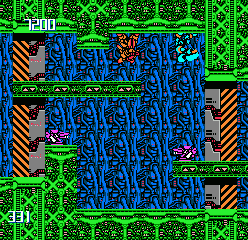
Metal storm is an action platformer where you control a mech unit tasked with destroying a rogue device known as Cyberg. That’s pretty much it as far as the story goes, but the gameplay is quite good. The controls are solid, the art direction is distinct, and the levels memorable.

The main mechanic in Metal Storm is the ability to switch gravity at will, and the game integrates this ability extremely well. The whole game is built around the dual gravity, and presents the player with a series of increasingly difficult challenges. But despite its high difficulty the game never resorts to a lot of the cheap tactics implemented by other NES games. When you die, it’s because you messed up, not because the game was flawed in design, and on top of that the iterations times are incredibly reasonable. The only slightly questionable aspect is the fact that you die in one hit, which seems a bit draconic, but not a deal breaker by any means.

On the whole, Metal Storm is a solidly put together platformer with a unique mechanic that makes it a stand out title for the NES, and worthy of greater recognition alongside other NES classics.

How well it holds up       4/4

Overall quality                8/10

Recommended

For further information about the game:

https://en.wikipedia.org/wiki/Metal_Storm_(video_game)

Ducktales RetroActive Review

Duck Tales picture

Ducktales

Original Release Date: 1989

As most gamers know, license games tend to suck. They tend to be cheap, rushed cash grabs exploiting the good will earned by better intellectual properties. This is one area in which modern and retro gaming is not so different. There are plenty of crappy license games nowadays, but there were plenty of them back in the “good old days” too, with the NES having some of the worst examples. (Dr. Jekyll and Mr. Hyde, anyone?)

However, there are always exceptions to rules, both nowadays and in the past, and one of the license games known for being actually good for the NES was Ducktales, a platformer based off of the Disney show of the same name.

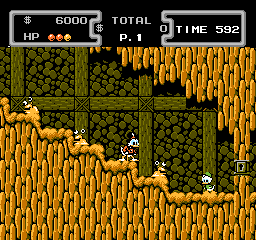
Like Megaman, the player is free to tackle the levels in any order they like. Unlike in Megaman, however, the levels are more open ended in nature, and allow for a fair amount of exploring. Each level is distinct and memorable, with its own aesthetic and gameplay challenges. The pogo hop mechanic allows the player new and interesting ways of navigating the levels, and is quite different from most standard platformers.

It’s a charming little game that clearly had some thought put into it, and while it’s not as memorable as, say, Castlevania or Megaman, it still stands up on its own merits.

By modern standards, it’s nothing special. It’s a bit short, and while it came out later in the NES’s lifespan, it still suffers from some archaic quirks. But it’s a fun game, and one that’s worth looking at if you’re a fan of 8 bit platformers.

That moon theme is pretty damn catchy too.

How well it holds up       3/4

Overall quality                7/10

Recommended

For further information about the game:

https://en.wikipedia.org/wiki/DuckTales_(video_game)

http://disney.wikia.com/wiki/DuckTales_(video_game)

Super Mario Bros 3 RetroActive Review

Super Mario Bros 3 picture

Super Mario Bros 3

Original Release Date: 1988

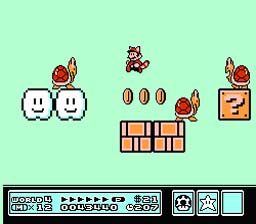
When looking at top 10 lists of the best NES games, the one game that is always there without fail is Super Mario Bros 3. It’s widely regarded by many as the best NES game, the best Mario game, and in some cases the best game ever made period. Those are some pretty bold statements, and the game seems to get nothing but gushing praise from older gamers. But does the game actually live up to the praise it gets?

In some respects, it’s a clear step up from the previous Mario games. It retains the basic elements that made Mario fun while also adding lots of new content. It has much better graphics, a new overworld map, new environments, new enemies, new power-ups, and so on. In terms of sheer amount of content, Super Mario Bros 3 eclipses the original Super Mario Bros. But is it actually a better game?

The thing that made the original Super Mario Bros such a fun and replayable game was its elegant simplicity and its straightforward, easy to pick up and play nature. It started off very simple, and gradually added more and more elements in order to give the player a consistently engaging and gradually more challenging experience.

This is unfortunately not the case with Super Mario Bros 3. A lot of the new additions feel like innovations for the sole sake of innovation without a clear indication of how it makes the game better. It lacks the elegant simplicity of the original, and instead focuses a lot more on various gimmicks. Each world has its own unique aesthetic, but also its own unique gimmick, which generally never showed up before that world, and will not show up again once that world is completed. This wouldn’t be too big of an issue, except that the gimmicks tend to range from silly, to pointless, to outright frustrating. In particular, the levels where the camera is constantly shifting around outside of the players control are just irritating, and provide challenges based less on skill than on trial and error.

It has the same basic elements that made the other Mario games good, and its overall design is fine, particularly for NES standards. But for all its technical accomplishments and new features, Super Mario Bros 3 just wasn’t as much fun to play as Super Mario Bros 1 and 2, at least for me. It is by no means a bad game, and there is certainly some fun to be had. But as far as I’m concerned, it’s certainly not the best Mario game, nor the best NES game.

How well it holds up       3/4

Overall quality                8/10

For further information about the game:

https://en.wikipedia.org/wiki/Super_Mario_Bros._3

http://www.mariowiki.com/Super_Mario_Bros._3

Megaman 3 RetroActive Review

Megaman 3 picture

Megaman 3

Original Release Date: 1990

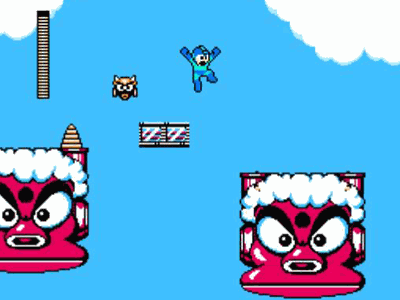
While Megaman 2 is widely regarded as the best in the series, Megaman 3 is typically placed right alongside it. Megaman 3 is generally considered to also be an excellent game, with some ranking it even higher than Megaman 2. But how does it actually compare?

In some respects, Megaman 3 is a clear evolution from Megaman 2, introducing many new features and expanding on what Megaman 2 did. One major difference is that Megaman is now given a new slide ability, which allows for new level layouts and new methods of solving problems and approaching enemies. It adds to Megaman’s mobility, and is a welcome addition. The extra items from Megaman 2 return, but this time are supplied in the form of Rush, Megaman’s robotic dog. It’s definitely an improvement, as Rush is much more memorable than the blank, generic items from Megaman 2. The aesthetic of the levels is also still very good, with a noticeable increase in graphical fidelity over Megaman 2. And of course, Megaman 3 introduces new story elements, such as Protoman, and expands on the established lore fairly well. In many respects, Megaman 3 meets and even surpasses Megaman 2.

Unfortunately, there are a number of areas where Megaman 3 falls short. The level design is not as good as in Megaman 2, and the difficulty feels more reminiscent of the original Megaman, which isn’t a good thing. While Megaman 2 focused on having tough but fair challenges, Megaman 3 has a greater emphasis on trial and error gameplay. Nothing the game throws at the player is unfair per se, but it’s so relentless that there’s no way a player will be able to get through the levels the first time around. It’s only once they know what to expect that they’ll be able to overcome the challenges with ease.

Each of the robot masters is pretty memorable, but defeating them requires more trial and error. Unlike Megaman 1 and 2, the robot masters and their weapons are a bit more obscure in design. Consequently the weakness of each boss is completely unintuitive, and can only be discovered through trial and error. And once you do get the weapons, they’re not actually that useful or fun to use. Most of them are just variations of horizontal projectiles, and aren’t much more powerful than Megaman’s default blaster. Some of them can be useful, but they tend to run out of ammunition much faster than in Megaman 2, so you can’t rely on them.

And then there are the doc robot stages, which are a shameless tactic to pad the game out and reuse the robot masters from Megaman 2. While an interesting idea in theory, in practice the levels aren’t that fun, and fighting the old robot masters when you have a completely different arsenal from Megaman 2 isn’t much fun either. Megaman 1 and 2 were a bit short in length, but this was not the right way to go about lengthening the experience.

I know I sound really negative, so don’t misunderstand me. Megaman 3 is by no means a bad game. Overall it is well designed and fun to play, and if you enjoyed the other Megaman games, you will almost certainly find something to like in this one. But on the whole Megaman 2 just felt more memorable and better put together, and was pure fun start to finish. Megaman 3 just feels kind of flat by comparison. It’s good, but not as good. It’s fun, but not as fun. It’s worth checking out, but there’s a reason why Megaman 2 is generally considered the better game.

How well it holds up       3/4

Overall quality                7/10

Recommended

For further information about the game:

https://en.wikipedia.org/wiki/Mega_Man_3

http://megaman.wikia.com/wiki/Mega_Man_3

Kirby’s Adventure RetroActive Review

Kirby's Adventure picture

Kirby’s Adventure

Original Release Date: 1993

By 1993, the 16 bit era had well established itself, and the preceding 8 bit era and the systems that supported it were looking increasingly obsolete and irrelevant. This has become even more apparent looking back now, as most of the 16 bit classics have aged like a fine wine, while most of the 8 bit classics have aged…okay. It’s little wonder that the NES was largely forgotten by 1993.

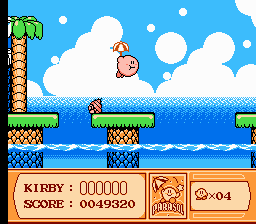
However, there were still a few final swan songs for the system, and one of the more well-known ones was Kirby’s Adventure. Kirby originally debuted on the Gameboy with Kirby’s Dream Land, a short but incredibly fun and memorable platformer for the portable system. Kirby’s Adventure has everything that Dream Land had, but takes it even farther, and makes the most out of the NES’s hardware.

Among other things, Kirby’s Adventure added color, Kirby’s copy ability that has now become synonymous with the series, a bunch of mini games, more levels, more enemies, and more fun.

The thing that makes Kirby’s Adventure stand out from its NES peers is that it focuses on one thing and one thing alone: being fun. While many of the earlier NES classics do have enjoyment, a lot of them also tried to make sure they lasted as long as possible to obfuscate the fact that they weren’t actually all that long. And they primarily did this through bad or archaic design choices. But Kirby’s Adventure is an NES game that thankfully shies away from all of that. No arbitrary iteration times, no clunky controls, no cheap enemy placement, no trial and error gameplay, no limited continues, just pure, simple, and fun platforming.

In addition to avoiding archaic game design, Kirby’s Adventure also strives to make the most of what the NES can do. Its visuals and sound effects are simple but appealing, and hold up better than many of the visuals and audio of older NES games.

Kirby’s Adventure isn’t the most deep or challenging game. It’s a bit on the easy side, and it’s very possible to finish the entire game in one sitting. But every moment is packed with creativity and joy, and there’s an elegant and charming simplicity to it that makes it an excellent game worth playing even after all these years.

How well it holds up       4/4

Overall quality                8/10

Recommended

For further information about the game:

https://en.wikipedia.org/wiki/Kirby%27s_Adventure

http://kirby.wikia.com/wiki/Kirby’s_Adventure

Double Dragon RetroActive Review

Double Dragon picture

Double Dragon

Original Release Date: 1987

Along with Contra, Double Dragon was a very popular and successful arcade game that gained even greater recognition when it was ported to the NES. Double Dragon is a beat ‘em up game in which the player takes the role of Billy or Jimmy, and must fight their way through the legions of a notorious gang in order to save their love interest, Marian.

The game has a simple but decent aesthetic, and each of the levels has a unique environment. The music, while not terrible, is merely okay, and not that memorable. The gameplay is fairly solid, as the controls for punching and kicking are fairly intuitive and satisfying, and the ability to pick up and use new weapons is a neat feature. The gameplay can feel a bit repetitive, and it is rather hard, but it is fair for the most part.

On the less positive side, the game gives you limited continues, and will send you all the way back to the very start if you make too many mistakes. While that’s the only major flaw, if you’re not a fan of beat ‘em ups, this game probably won’t appeal to you very much.

I’m not sure what else to say about Double Dragon. There’s nothing really wrong with it, but there’s nothing that great about it either. It didn’t leave much of an impact on me, so ultimately all I can say is that it’s just okay.

By modern standards, Double Dragon isn’t fantastic or amazing, but it’s a decent enough game, and may be worth checking out.

How well it holds up       2/4

Overall quality                6/10

For further information about the game:

https://en.wikipedia.org/wiki/Double_Dragon

http://doubledragon.wikia.com/wiki/Double_Dragon

Contra RetroActive Review

contra picture

Contra

Original Release Date: 1987

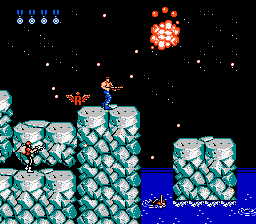
The NES era was a transitional period, and among other things it marked the beginning of a shift away from arcades towards home consoles, as the capabilities of the latter were slowly catching up to those of the former. As a result, the NES received a number of ports of arcade games. One of those games was Contra, a run and gun action game that was very successful and is largely considered one of the best NES games of all time. But how well does it stand up today?

On the whole, quite well actually. The controls are very responsive and precise, the gameplay is fast paced and engaging, and while the game keeps you on your toes, its challenges are never unfair or unreasonable. The art direction and soundtrack are also quite good despite the limited capabilities of the NES, and the game is paced in a way that makes things gradually more difficult in a hard but fair way.

The only real problem with Contra is the lives system. Making a player start a level over again for making too many mistakes is reasonable. Making a player start the entire game over again, on the other hand, is not. Forcing the player to wade through the same content over and over again is just punishing, particularly with a game that’s difficult. Clearly this design choice was made in the arcade version in order to keep players pumping in quarters so they could continue, but retaining it in the console version is a rather questionable design choice.

Fortunately, the developers understood this, and so provided players with the Konami code, a code that gives the player more lives, and therefore more breathing room. While it doesn’t fix the flaw of the lives system, it does reduce the problem, and makes playing through the game more fair and reasonable. (Incidentally, anyone who thinks using the Konami code is “cheating” is officially an idiot with no understanding of good game design.)

On the whole, Contra is a tough but fun game that stands the test of time remarkably well.

How well it holds up       3/4

Overall quality                8/10

Recommended

For further information about the game:

https://en.wikipedia.org/wiki/Contra_(video_game)

http://contra.wikia.com/wiki/Contra_(video_game)

Castlevania 3 RetroActive Review

castlevania-3 picture

Castlevania 3: Dracula’s Curse

Original Release Date: 1989

After many expressed disappointment in Castlevania 2, the developers decided to return to the formula of the first game, but go even bigger with it. The end result is Castlevania 3: Dracula’s Curse, the final Castlevania game for the NES, and the one that is widely considered the best out of the three. But is it actually the best?

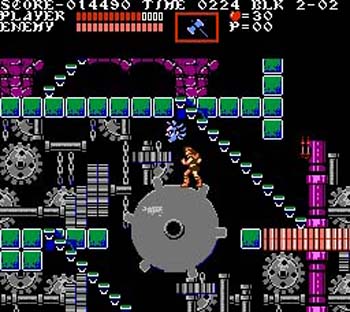
In many areas, Castlevania 3 is a clear step up from the original. The graphics have been dramatically improved, the soundtrack is even longer, and just as memorable, and there are tons of new features. There are now other playable characters that you can find throughout the course of the game. These include Sypha Belnades, a sorceress with magic based attacks, Grant Danasty, a pirate who can climb on walls and ceilings, and Alucard, the son of Dracula who has the ability to shoot fireballs and turn into a bat for a limited time. Each character has a unique play style, and the different abilities give the player different ways of solving problems and getting past obstacles.

Another major change is the addition of branching paths. Unlike the first Castlevania, which was completely linear, Castlevania 3 will offer the player the option of choosing alternate routes after completing certain levels. Due to the limitations of the NES, there aren’t that many choices, and they all converge back to the same point once you reach Dracula’s Castle, but it’s a neat feature, particularly for an NES game, and it does add a fair amount of replayability to the experience.

In many areas, Castlevania 3 took what the first Castlevania did and takes it to the next level. Unfortunately, this also includes the difficulty, and this is where the game suffers. While Castlevania could be frustrating at times, I grudgingly admitted that it was, for the most part, fair in its design and challenge. Castlevania 3, on the other hand, is not.

The first major problem is, once again, the controls. While they’re not quite as stiff as they were in the first game, they’re still pretty bad, and are a constant hindrance throughout the game, as most of the other player characters also have stiff controls. The only character that has good controls is Gant, but he also has the worst offensive and defensive capabilities, which doesn’t make him ideal for facing tough enemies or challenges.

But the bigger problem is the level design. While Castlevania was difficult, it at least had the courtesy of not throwing more challenges at the player than they could handle, and avoided cheap enemy placement. (With the obvious exception of the hall before the grim reaper) Castlevania 3, on the other hand, shows no similar restraint, and will constantly have relentless and often unfair challenges thrown at the player.

Sometimes this can mean cheap enemy placement, other times awkward and unforgiving platforming, but the most egregious problem is the abundance of stairs. The controls for the stairs in the first Castlevania were incredibly awkward, but the game was smart enough to not include too many in its design. In Castlevania 3, the stairs are everywhere, and will often lead to many cheap and unavoidable deaths.

And if all of this wasn’t bad enough, the iteration times are downright punishing. When you died in Castlevania, you were typically sent back one, maybe two rooms, a strict but reasonable penalty for messing up. In Castlevania 3, on the other hand, it’s not uncommon for the game to send you back three or four rooms when you die, sometimes more, forcing you to wade through the same content over and over again for no good reason but to prolong the experience. All of this really sours the experience.

It’s a shame, because in many respects, Castlevania 3 surpasses the original. It has better graphics, a more extensive soundtrack, new playable characters, multiple pathways, new environments, new items, and a fair amount of replayability. It should be the better game, but because of how relentlessly frustrating and difficult it is, ultimately I can’t say that it’s overall a better game than the original.

Despite some of the major shortcomings, I still managed to enjoy Castlevania 3 a great deal, and I can see why many consider it to be the best. Ultimately, whether Castlevania 3 is worth checking out will depend on how much you enjoyed the first game. If you liked the original Castlevania, you’ll probably like this game. If you didn’t, however, you’re probably better off skipping this one.

How well it holds up       2/4

Overall quality                7/10

For further information about the game:

https://en.wikipedia.org/wiki/Castlevania_III:_Dracula%27s_Curse

http://castlevania.wikia.com/wiki/Castlevania_III:_Dracula’s_Curse
Megaman 2 RetroActive Review

Megaman 2 picture

Megaman 2

Original Release Date: 1988

The first Megaman was a decent enough game, but it did have some troubled elements, and the game didn’t initially sell very well. As a result, there may have not been any more games for the blue bomber. Fortunately, the developers were given the opportunity to create a sequel, ironing out the flaws of the first game and expanding on the things it did well. The end result, Megaman 2, a sequel that is a big improvement over the first game and is largely considered the best game in the series.

The same basic elements of the first game return. Megaman has to overcome a series of robot masters, and to do so he must beat their respective levels. Like in the first game, the player can play the stages in any order, and obtain different powers upon beating each boss, which gives the game a lot of replayability and multiple methods of solving problems. The smooth controls return, as does the good level design and the well-paced combat.

But Megaman 2 goes above and beyond what the first game did. Instead of six robot masters, there are now eight. While the weapons in the first game were pretty good, the ones in the second game are much better. All of them are fun to use, and all of them are actively useful, though some will be used more than others. The music, which was already good in the first game, is even better, and makes playing through the game an auditory delight.

And while each of the levels have a unique aesthetic like in the first game, the actual design of the levels is much better, and much fairer. Megaman 2 removes a lot of the cheap elements from the first game, significantly reducing the amount of trial and error and leaving only fair, reasonable, and fun challenges. In addition, the game introduces some extra items to allow players more freedom in how they get around the various levels.

There are a few minor problems. The game’s graphics do show their age a bit, and there is occasional sprite flickering. Also, while the game is mostly fair, there are some bad design choices with the Wily stages. The iteration times on the Wily stages can be a bit ridiculous, and the turret boss is really not well designed, either visually or from a gameplay perspective.

Overall, Megaman 2 is an incredibly fun and memorable game that stands the test of time with flying colors.

How well it holds up       3/4

Overall quality                 8/10

Recommended

For further information about the game:

https://en.wikipedia.org/wiki/Mega_Man_2

http://megaman.wikia.com/wiki/Mega_Man_2

Zelda II: The Adventure of Link RetroActive Review

Zelda 2 picture

Zelda II: The Adventure of Link

Original Release Date: 1987

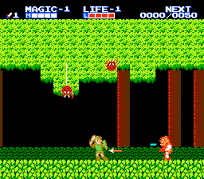
While the original Legend of Zelda is typically hailed as a classic, it hasn’t aged very well. It was impressive for the time, but it doesn’t even begin to hold a candle to its 16 bit counterpart, A Link to the Past, much less many of the more advanced and far superior fantasy adventure games we have available to us today.

Zelda II, on the other hand, has had a more mixed reception. While also generally regarded as a classic, many disliked its departure from the original game’s style, and there has never been another Zelda game that followed in its footsteps. It’s a bit of a shame, because its only real crime was being different from the first game, but different isn’t necessarily bad. Is Zelda II the underwhelming black sheep of the franchise, or is it an underrated classic?

There are legitimate problems with the game. The most egregious flaw is the fact that the game sends you all the way back to the start when you run out of lives, a problem that hinders the game throughout. The way forward can sometimes be needlessly cryptic, and certain sections like Death Mountain are brutally difficult, often in cheap ways.

However, despite its faults, I actually think it’s a more enjoyable game than the original. Firstly, there’s the fact that it’s unique. While the original may have started the formula that most subsequent games would follow, most of the subsequent games did the formula infinitely better, rendering the first game obsolete. In contrast, because there is no other game quite like Zelda II, it has more staying power, and is still worth playing.

Unlike the first game, Zelda II is more linear and straightforward in its design. This may be a turn off for some, but I think it’s a change for the better. While the first game may have offered players “freedom”, the ridiculously open ended nature of the game simply meant that players would have to spend hours wandering around trying to figure out what they were supposed to do, and the game gave little to no direction to help them. And while the second game may be more linear and therefore “restrictive”, it also gives players a properly paced and cohesive experience that isn’t possible with open ended gameplay.

To that end, Zelda II is in large part a side-scrolling action platformer with RPG elements. The combat, unlike the first game, is responsive and satisfying, and gives the player the tools they need to overcome enemies. The leveling system is straightforward and rewarding, and while it does allow for grinding, it never requires it. The addition of magic spells adds a new level of depth and strategy to the game, and the gameplay as a whole is much more enjoyable than the first game.

The addition of towns also makes the game feel more alive, and gives the impression that you’re actually adventuring across the lands, and not just wandering around a barren wasteland like in the first game.

Aside from a handful of rather insane sections, the game is challenging in a hard but fair manner. Whenever you die, it’s almost always because you messed up and not because the game hampered you with awkward controls or threw too many obstacles at you at once, as was often the case with the first game. Yes, it is unrelenting, and it can be brutal at times, but it had an element of fun and accomplishment to it that was missing from the first game, at least for me.

It’s not a perfect game by any means. It does show its age, and it does have some flaws. But on the whole, it’s a well-crafted game, and has withstood the test of time a bit better than its predecessor.

How well it holds up       3/4

Overall quality                7/10

Recommended

For further information about the game:

https://en.wikipedia.org/wiki/Zelda_II:_The_Adventure_of_Link

http://zeldawiki.org/Zelda_II:_The_Adventure_of_Link