Super Mario Bros 2 RetroActive Review

Super Mario Bros 2 picture

Super Mario Bros 2

Original Release Date: 1988

This game is rather unusual, and has had a bit of a mixed reception over the years. It’s not actually a Mario game, but is in fact a game called Doki Doki Panic that was reskinned for an American release. This decision was made because Nintendo felt that the actual Super Mario Bros 2, later released as Super Mario Bros the Lost Levels, would be too hard for western audiences, and that the title was a little too similar in nature to the original.

Personally, I think this was a wise move for two reasons. First of all, the actual Super Mario Bros 2 was essentially just the first game again, but with all of the fun sucked out and replaced with heaps of frustration. Consequently, western audiences didn’t miss much in not getting it. And second of all, the Super Mario Bros 2 we got is actually a really solid game.

It has the same basic elements as the first game. You jump across platforms, obtain different power-ups, and try to make it to the end of each level. In addition, the smooth controls, well-crafted difficulty curve, and the inclusion of memorable music all return. But there are a number of new elements.

Instead of only controlling Mario, players can now choose between four different characters, Mario, Luigi, Peach, and Toad, with each character having their own unique playstyle. The aesthetic is also different, with a noticeable improvement in graphical fidelity over the first game, and a more unique series of environments for the player to traverse through.

There is also a new mechanic which allows the player to pick up various objects, including enemies, and toss them around. While this changes how the game works, it also gives the players new ways of solving problems and overcoming obstacles. The levels are also more dynamic. While Super Mario Bros always had you moving right, Super Mario Bros 2 mixes it up, sometimes moving the player right, but sometimes sending them up, down, even to the left, and sometimes all in the same level. This, combined with the new picking up ability, places a greater emphasis on puzzles. Some may not like this change, as it disrupts the elegant simplicity of the first game, but I think it’s a nice change of pace.

On the less positive side, the game has a life system, and if you run out, you go right back to the beginning. And unlike in the first game, there aren’t really any shortcuts, which means the player will have to wade through the same content over and over again just to get a shot at the spot that was giving them trouble.

Despite a few gripes here and there, Super Mario Bros 2 is a fun and well put together game, and is a worthy sequel to the original, even if it wasn’t originally a Mario game.

How well it holds up       3/4

Overall quality                   8/10

Recommended

For further information about the game:

https://en.wikipedia.org/wiki/Super_Mario_Bros._2

http://www.mariowiki.com/Super_Mario_Bros._2

Ghosts ‘n Goblins RetroActive Review

Ghosts n Goblins picture

Ghosts ‘n Goblins

Original Release Date: 1985

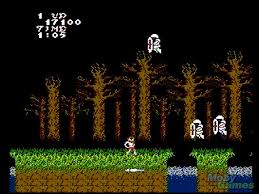
The NES era is often known for having very difficult games, and many gamers seem to want to go back to the design philosophies that brought forth many of these challenging games. This is a mindset I cannot begin to fathom, because much of the NES era’s difficulty came from bad design choices, both deliberate and unintentional. These design decisions tended to make games longer, not better, more grueling, not more fun, and often required the player to jump through ridiculous hoops that would never fly today, and for good reason.

Ghosts ‘n Goblins is the NES era at its worst. It is stuffed full of archaic design decisions that would thankfully never be allowed today, and is designed to last as long as possible without any regard for the player’s enjoyment or wellbeing. It is a game that is utterly devoid of fun and joy, and seems especially designed to piss off the player as much as possible. What are its sins?

First of all, the graphics are downright ugly. I know this was an early NES game, but despite the limited graphics there are plenty of NES games that have an appealing aesthetic. But not only are the graphics of poor quality, the art direction is extremely bad. The games various levels are an eyesore that are not fun to look at. In addition, the art direction doesn’t give any sort of context or life to the game. Castlevania managed to make the player feel as though they were traveling through Dracula’s castle. Ghosts ‘n Goblins, on the other hand, just makes the player feel as though they’re making their way across ugly platforms against ugly backgrounds, with only a vaguely spooky, Halloween theme tying the whole mess together.

Second of all, the music and sound effects are downright unpleasant. In addition to not being pleasing to the eye, the game is no more appealing to the ears. Again, despite the limitations of the NES, there are games that manage to have catchy and memorable soundtracks that are pleasant to listen to. But this is not the case with Ghosts ‘n Goblins. The music is screechy and grating, and the sound effects aren’t much better. It’s a load of unpleasant noise that, combined with the unappealing visuals, makes playing the game a thoroughly miserable experience.

And then of course there’s the gameplay. It’s like if Castlevania had all of the fun and creativity sucked out of it, leaving only the frustration. The controls are stiff, the items aren’t fun to use, the combat can range from annoying to infuriating, and making even minimal progress is an exercise in endurance. It’s so archaically designed and so relentlessly frustrating that one has to wonder if the developers were straight up sadists determined to torment anyone unfortunate enough to pick up their game.

I really have nothing more to say about Ghosts ‘n Goblins. It’s aged terribly, it wasn’t that good to begin with, and the only people who might like it are masochists who have too much time on their hands.

How well it holds up       1/4

Overall quality                 3/10

Not Recommended

For further information about the game:

https://en.wikipedia.org/wiki/Ghosts_%27n_Goblins

http://ghostsngoblins.wikia.com/wiki/Ghosts_%27n_Goblins

Punch-Out RetroActive Review

Punch Out picture

Punch-Out!!

Original Release Date: 1987

One genre in gaming I’ve never cared for is sports simulators. I’ve always felt that, if you really enjoy the sport, you should go out and do it in real life, not just pretend to do it. So I wasn’t expecting much from Punch-Out. I thought it would just be a dull boxing simulator that’s been overhyped by the nostalgia of older gamers. I was pleasantly surprised, however, to find that Punch-Out was in fact one of the most enjoyable, well designed, and unique games for the NES I’ve played so far.

Punch-Out is a game where you take control of Little Mac, a lightweight who is determined to become a boxing champion, and must defeat various opponents in the ring to achieve his goal. Each fight feels fresh and invigorating, each one requires a great deal of strategizing and precise timing, and if you fail, it is entirely your fault. The controls are tight, the graphics are simple but appealing, the music is quite good, and it has a finely crafted difficulty curve that makes the game gradually more challenging in a hard but fair manner.

Punch-Out is a prime example of how watching someone playing a game and playing it yourself can be two very different things. I didn’t expect much from it, but I can safely say that it deserves the praise it gets from older gamers. While it shows its age in a few respects, and some of the fighters give off slightly racist undertones, Punch-Out is a solid game that holds up incredibly well.

How well it holds up       3/4

Overall quality                 8/10

Recommended

For further information about the game:

https://en.wikipedia.org/wiki/Punch-Out!!_(NES)

http://punchout.wikia.com/wiki/Punch-Out!!_(NES)

Ice Climber RetroActive Review

Ice Climber picture

Ice Climber

Original Release Date: 1985

If you’re like me, you probably never heard of the Ice Climbers before their introduction in Super Smash Bros Melee. For years, I’ve been wondering why they were included. After playing their original game for the NES, I’m still wondering. It’s not like they were representing some previously underrated franchise, as was the case for characters like Marth and Roy, since the Ice Climbers have only starred in one game. And it’s not like they were chosen for Melee because their game was really good, because it’s really not.

Ice Climber is an arcade style platformer where you control one of the Ice Climbers and try to get to the top of the mountain. And…that’s it. There’s nothing else to it. It’s essentially the same level over and over again, just switched around to be a little harder each time.

It’s the perfect game that exemplifies why the NES era was not as good as many would have you believe. While there were undeniably good games, many of them were glorified arcade mini-games, and had so little content it’s actually rather insulting. Ice climber is essentially just a less fun variation of the original Mario Bros game, and is definitely not worth the five dollars it’s being charged for on the Nintendo e-shop.

There’s really nothing else to say about Ice Climber. It was an okay game for its time, and a downright terrible game by today’s standards. Don’t even bother with this one.

How well it holds up       1/4

Overall quality                 3/10

Not Recommended

For further information about the game:

https://en.wikipedia.org/wiki/Ice_Climber

http://iceclimber.wikia.com/wiki/Ice_Climber

Metroid RetroActive Review

Metroid picture

Metroid

Original Release Date: 1986

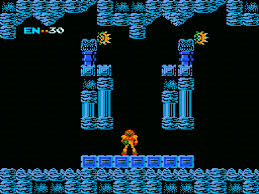
Metroid, along with the Legend of Zelda, was one of the first games to feature open ended exploration. Starring the bounty hunter Samus Aran, the game takes the player along her journey across the Planet Zebes as she attempts to foil the plans of a group of Space Pirates.

Despite showing its age in a number of areas, Metroid still shines in a few aspects. The controls are very good, the art direction does a good job of conveying a vast, alien world despite the limited graphics, and the music perfectly complements the tone of the game.

Unfortunately, there are many significant flaws with Metroid, most of which are due to the fact that it was attempting new things that had never been done before. While one can respect it as a pioneer, the reality is that it attempted to do many things before the technology and the experience of the developers could make the most of them. The end result is a game that does not hold up very well at all.

As some may know, I didn’t like the original Zelda, and I have to say that I dislike Metroid for many of the same reasons. Unfortunately, Metroid is even worse than the original Zelda when it comes to archaic and flawed design choices. Zelda, for all its faults, had a few things going for it that put it above Metroid. As vague and unhelpful as it was, at least Zelda had a map, where Metroid has none at all. As cryptic and nonsensical as many of the clues were, at least Zelda gave the player a few hints about what to do, where Metroid doesn’t give the player any direction whatsoever. And as difficult and frustrating as it can get, Zelda at least starts off relatively simple, and gradually increases the level of challenge, where Metroid is a frustrating chore right from the get go.

This is due in large part to the fact that Metroid starts the player off with almost no health, but makes the enemies inflict ridiculous amounts of damage right from the start. While the combat is better than in Zelda, it has the problem of not giving the player enough tools to deal with the various enemies and obstacles they have to overcome. While there are power-ups that do eventually mitigate this issue, it takes quite a while to get to that point.

And then there’s the biggest problem of all, the fact that the game is completely and utterly unintuitive in its design. As bad as Zelda was in this regard, at least it had a map, and distinguished between the overworld and the dungeons, making it at least feasible that the player could figure out the goals and objectives of the game. Metroid, on the other hand, gives the player nothing. All they can do is wander aimlessly around until eventually they find which way to go next.

But doing so is an exercise in frustration, because many of the areas look exactly the same. In conjunction to the fact that there is no map, it is extremely easy to get lost and disoriented. As I said in my Zelda review, there is something fundamentally wrong with a game where it is entirely possible to wander around for hours and make no progress. This could be forgivable if the game was fun to play, but it’s really not that enjoyable at all, as the charm of the game quickly wears off once the numerous design flaws turn the game from a space faring adventure into a monotonous chore.

To top it all off, there is another game that fixes all of these issues and improves on the things Metroid did well, and that game was Super Metroid. Super Metroid was able to do what the original Metroid could not, and it surpasses the original in every single area imaginable. As a result, Metroid is unquestionably obsolete.

While somewhat interesting as a piece of gaming history, as an actual game it is an archaic, outdated mess that has little to offer to the modern world, particularly when compared with its successors.

How well it holds up       1/4

Overall quality                 4/10

Not Recommended

For further information about the game:

https://en.wikipedia.org/wiki/Metroid_(video_game)

http://www.metroidwiki.org/wiki/Metroid_(game)

Ninja Gaiden RetroActive Review

Ninja Gaiden picture

Ninja Gaiden

Original Release Date: 1988

In an era where story telling was virtually non-existent, Ninja Gaiden was one of the first games to make a serious attempt at conveying a narrative to go along with the gameplay. While most game plots tended to be incredibly basic, Ninja Gaiden incorporated cut scenes and extensive dialogue to give more context and meaning to the gameplay.

Ninja Gaiden places the player in the role of Ryu Hayabusa, a ninja who sets out on a quest to avenge his father, and along the way uncovers a much darker conspiracy. The story is conveyed through cut scenes that play in between each of the games levels, and they are designed to make players eager to find out what happens next.

While the story elements may have been impressive for the time, they seem rather quaint by today’s standards. The cut scenes are very basic, and while the story has a few interesting twists and turns, it’s not that engaging or memorable. In addition, there’s a bit of a disconnect between the story and the gameplay, with the game and the cut scenes not always syncing up in a believable way.

However, Ninja Gaiden was also renowned for being a good action platformer, and in terms of the gameplay, Ninja Gaiden is rather well crafted. The controls are incredibly smooth and precise, and give the player the sense of actually being a ninja. While the item system is a little unintuitive, the power-ups and additional weapons you can find are incredibly fun to use. In addition, the aesthetic of the game is quite good, with well-designed environments and memorable music tracks that suit the overall atmosphere of the game.

It also is a rather difficult game, and unfortunately a lot of the difficulty comes from flawed design choices rather than from actual challenge. First of all, every time the character takes damage, he flies back a ridiculous amount, which makes sections with a lot of bottomless pits a nightmare to navigate. It’s not as bad as in Castlevania, but it’s still a constant annoyance. Another major problem is that enemies have a tendency to respawn infinitely if you move even slightly off screen. Now, I’ve noticed this issue in quite a few NES games I’ve looked at, but it’s by far the most obvious and problematic here. Finally, the game has a tendency to dogpile a lot of enemies on you in the later levels. This wouldn’t be a problem if the previous issues I mentioned didn’t exist, but they do, and so the number of enemies the game throws at you can get excessive at times.

Despite some of the rather cheap tactics the game employs to make it longer rather than better, I still had a lot of fun with Ninja Gaiden. While the game has a number of design flaws, it still gives the player the tools they need to overcome each new obstacle, and manages to keep the experience engaging without making it too frustrating. Overall, it’s not perfect, but it’s still pretty good despite its age.

How well it holds up       2/4

Overall quality                7/10

Recommended

For further information about the game:

https://en.wikipedia.org/wiki/Ninja_Gaiden_(NES_video_game)

http://ninjagaiden.wikia.com/wiki/Ninja_Gaiden_(NES)

Castlevania RetroActive Review

Castlevania picture

Castlevania

Original Release Date: 1986

Known as one of the most classic and difficult games of the NES era, Castlevania left quite a mark on the gaming medium. While Super Mario Bros established the basic formula that most successive platformers would follow, Castlevania added its own flavor to the mix. It introduced new concepts to the medium and established a long running and widely respected franchise. But how well has it weathered the passage of time?

In Castlevania, the player assumes the role of Simon Belmont, a vampire hunter tasked with killing Dracula. About as basic a story as you can get, but the game does a good job of reinforcing this quest through the aesthetic and the gameplay. The design of the levels gives you the sense that you’re making your way through Dracula’s castle, and not just across a series of platforms. The graphics and color scheme do look a bit dated, but the art direction is still impressive given how old the game is. In addition, the music is extremely catchy and memorable, and perfectly complements the overall tone of the game.

On the other hand, the game’s difficulty lies less in challenging the player and more on imposing restrictions on the player. The main problem is that the control scheme is incredibly stiff. There’s a slight delay to the whip, Simon’s walking speed is very slow, the jump arch allows for no room for error, and Simon will fly backwards a ridiculous amount whenever he takes damage. All of this creates a disconnect between the player and the on screen action.

In games such as Super Mario Bros and Megaman, the controls are smooth and precise, and the on screen action always matches the player’s input perfectly. As a result, whenever you die in those games, it always feels like it was your fault because you were in control. By contrast, Castlevania often feels as though it makes the player fail, as the clunky control scheme will frequently prevent the player from getting Simon to do what they wanted him to do. In a platformer where precision and timing is key, having a bad control scheme is a major problem.

Now, to Castlevania’s credit, most of the game is designed around the awkward controls. Throughout the game the player is usually only expected to overcome a few obstacles at a time, and it gradually increases the difficulty as the game goes on. While the controls can be a hindrance, the good level design prevents the game from being outright unfair.

The only time when the game abandons good design and fairness is in the hallway before the grim reaper and the grim reaper himself. The amount of things the player is expected to deal with in that section is straight up sadistic, and it’s a definite low point in the game. Still, the rest of the game is reasonable in its challenge, and even though the final fight with Dracula is incredibly difficult, it’s difficult in a fair way, and is a very satisfying conclusion to a very competent action platformer.

Castlevania is not for the faint of heart. It’s extremely challenging, and not always in a fair manner. However, it does a lot of things very well, and there is genuine enjoyment and satisfaction to be had from it. Whether or not it’s a fun game will be up to personal preference, but it’s a game that’s at least worth checking out.

How well it holds up       2/4

Overall quality                7/10

Recommended

For further information about the game:

https://en.wikipedia.org/wiki/Castlevania_(1986_video_game)

http://castlevania.wikia.com/wiki/Castlevania_(video_game)

Mega Man RetroActive Review

Megaman 1 picture

Mega Man

Original Release Date: 1987

Mega Man is a rather unusual figure. Most of video gaming’s icons have retained their presence and influence in the industry up to the present day thanks to the more recent entries in their respective series. Mega Man, on the other hand, has not had many games at all in recent years. As a result, he has faded into obscurity, with his only major activity lately being his appearance in Super Smash Bros 4. Has this loss in visibility been because his games weren’t actually that good, or was it just bad luck on his part?

The original Mega Man game, like many games for the NES, is an action platformer where the goal is to reach the end of each level. Like Super Mario Bros, it has tight controls, memorable music, and a simple but appealing aesthetic. There are a number of things that make Mega Man its own beast, however.

The first major difference is that the player can tackle the stages in whatever order they choose. Each stage has its own boss at the end, and if you can defeat the robot master, Mega Man will gain their ability. This gives the game a lot of replayability, as it allows for the player to experiment with different methods of tackling each stage. Each of the abilities gives Mega Man new ways of solving problems, and can make seemingly impossible challenges more manageable.

As I mentioned before, the music and the visuals are quite appealing, but one thing that sets them apart from Super Mario Bros is that there’s a bit more variety from level to level. Each stage feels unique, and avoids the trap of feeling repetitive and samey.

On the flip side, some of the challenges, while never exactly unfair, do sometimes feel rather cheap. The floating platforms in Iceman stage and the UFO-like enemies in Elecman stage are good examples, as they’re hard to get by unscathed, and can make the game feel more tedious and frustrating than necessary. In addition, the game isn’t always very clear about how to overcome certain obstacles, and thus necessitates a fair amount of trial and error. Finally, the iterations times can be rather ridiculous, as the game has a nasty habit of punishing players for dying by requiring them to wade through minutes of content they’ve already mastered just to have another try at the section that was giving them trouble.

On the whole, Mega Man is a solid and fun platformer, and while it suffers from some archaic design choices that drag the experience down, it is still worth playing even to this day.

How well it holds up        3/4

Overall quality                 7/10

Recommended

For further information about the game:

https://en.wikipedia.org/wiki/Mega_Man_(video_game)

http://megaman.wikia.com/wiki/Mega_Man_(video_game)

The Legend of Zelda RetroActive Review

The Legend of Zelda picture

The Legend of Zelda

Original Release Date: 1986

The original Legend of Zelda is widely regarded as an absolute classic. It was one of the first games to feature open ended exploration, and was a pioneer of the genre. As someone who is a major fan of the Zelda series and video games in general, I have a healthy amount of respect for this game as a piece of gaming history.

However, I can’t say I particularly care for this game, because as an actual game it leaves a lot to be desired. It may have been impressive when it first came out, but it has aged rather badly.

The first problem is that the game does not give the player any direct feedback. The game sets you into the middle of the world, and then you’re supposed to figure it out from there. Now, this wouldn’t be a problem if the game was intuitively designed, but it’s not. I’ll compare it to another game, namely Super Metroid, and explain why Super Metroid works and why the original Zelda fails by comparison.

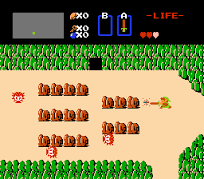
One key factor is that Super Metroid had a map that was actually helpful. It told the player where they were, and ensured that they never got lost. The map in Zelda, however, is much more vague, and does not help the player to navigate through the world. It doesn’t give the player information about where they need to go or even about where they’ve been, and only gives them a general idea of where they currently are. And while the maps you can find inside dungeons are marginally more useful than the overworld map, they’re still pretty vague, and cease to be that helpful once the dungeons start to get bigger and more complicated.

But the main reason why Super Metroid works where the original Zelda fails is that it is intuitively designed. Both games are similar in that they don’t give the player any explicit directions. Neither game tells the player where they need to go, how the controls work, how the items work, how to uncover secrets, or anything else about how the game works. But Super Metroid’s level design is incredibly clever because it gives the player implicit directions that give them the guidance they need while still letting them figure things out on their own. Super Metroid is also not ridiculously open ended. While there is a great deal of exploring, the game also requires the player to do specific things in a certain order before unlocking new areas. This sequence is key, as it is what enables a properly paced and balanced experience.

This is not at all the case with the original Zelda. There is nothing intuitive or straightforward about how it is designed, as the game gives the player no direction at all, explicit or implicit. On top of that, the game lets the player explore almost the entire world from the get go, which makes it impossible to have a properly paced or balanced experience. In theory this gives the player a lot of freedom, but in practice it simply makes the player wander aimlessly around trying to figure out what they’re supposed to do. Whatever the apologists might say, there is something fundamentally wrong with a game where it is entirely possible to wander around for hours and make no progress.

All of this would be forgivable if the game was fun to play, but speaking as someone who doesn’t have rose tinted glasses, it’s really not. You’re extremely limited in how you can interact with the environment, and as a result there’s really not that much to do. Yes, there are secrets to uncover (though this can get mind numbingly tedious if you aren’t using a guide) and shops to buy from. But beyond that, most of the gameplay consists of wandering around the overworld and killing the various enemies you encounter.

Which brings me to my next criticism; the combat is incredibly choppy and imprecise. Link cannot swing his sword like he can in the later games, he can only stab directly in front of him, and he has to pause every time he does. In short, Link cannot attack diagonally or move while attacking. However, the enemies are not limited in this way. This makes combat in the overworld rather tedious and annoying, but it gets downright frustrating in the dungeons once they introduce enemies that take a lot of hits to kill, but can kill you in a matter of seconds. And when the game starts to dogpile that type of enemy on you, things can get extremely infuriating.

To top it all off, the game looks downright ugly. I know that graphics are not everything, but if the gameplay isn’t fun, an uninteresting or unappealing aesthetic can only compound the problem.

Between the unintuitive design, the cryptic hints that are only helpful when compared with the ones in Simon’s Quest, the choppy combat, the flat and lifeless NPCs, the ugly visuals, and the lack of any context to make the player understand or care about what they’re doing, the game as a whole is a big mess. Playing the game, I never got the feeling of exploring a vast world or going on an epic adventure, I just felt like I was wandering around a barren wasteland with no real purpose at all.

Some may say that I don’t get it, as the fact that I grew up with titles such as Ocarina of Time, Majora’s Mask, and Wind Waker makes me prejudiced against the older games that came out before my time. Well, my counterargument is that I didn’t grow up with A Link to the Past either, and yet I think it’s a phenomenal game. Why? Because, without any nostalgia, I find A Link to the Past to be a game that has genuinely aged well, and consequently is still good even years after its release. But I can’t say the same of the original.

You will never hear me dismissing the importance of the original Zelda as a piece of gaming history. But looking at it as an actual game, ultimately I cannot recommend it to anyone except to video game enthusiasts who are curious about how this franchise began.

How well it holds up       1/4

Overall quality               4/10

Not Recommended

For further information about the game:

https://en.wikipedia.org/wiki/The_Legend_of_Zelda_(video_game)

http://zeldawiki.org/The_Legend_of_Zelda_(Game)
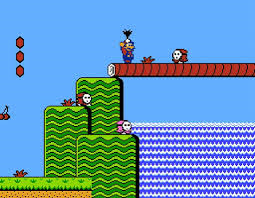
Super Mario Bros RetroActive Review

Super Mario Bros

Super Mario Bros.

Original Release Date: 1985

Super Mario Bros has cemented itself as one of the most important and influential video games of all time. It, along with the NES, revitalized the market and set the stage for the industry we know today. Its importance as a piece of gaming history cannot be understated. But how well does it hold up as an actual game?

In terms of the graphics and sound design, the game definitely shows its age, lacking the more detailed graphics that can be found in later NES games. The music remains quite catchy and engaging even by today’s standards, though the story and characters aren’t particularly memorable.

But of course, no one plays a Mario game for the story, and where this game really shines is in the gameplay. The controls are smooth and intuitive, and it’s easy to see why this game set the standard for almost all platformers to come. The level design is also very good, and while the aesthetic of the levels can get rather repetitive, it does a good job of having a gradually increasing difficulty curve that is challenging, but never unfair. The game does have a live system that unfortunately will send the player back to the very start if they run out, but fortunately there are shortcuts that mitigate this problem.

Between the smooth gameplay, catchy music, alternate routes, and hidden secrets, this game has a lot of replayability and entertainment value. It may show its age in certain areas, but it is still nonetheless a good game that absolutely should be looked at by anyone interested in gaming’s history or gaming in general.

How well it holds up       3/4

Overall quality               8/10

Recommended

For further information about the game:

https://en.wikipedia.org/wiki/Super_Mario_Bros.

http://www.mariowiki.com/Super_Mario_Bros.