Star Fox RetroActive Review

Star Fox Picture

Star Fox

Original Release Date: 1993

While many older titles are highly respected for being pioneers, as pioneers they often lack the polish and depth of later games. This can be seen with games like the original Zelda and Metroid. While they had good ideas, they weren’t able to make the most of them due to the limitations of the time. As a result, they haven’t aged very well, and pale in comparison to their 16 bit successors, A Link to the Past and Super Metroid.

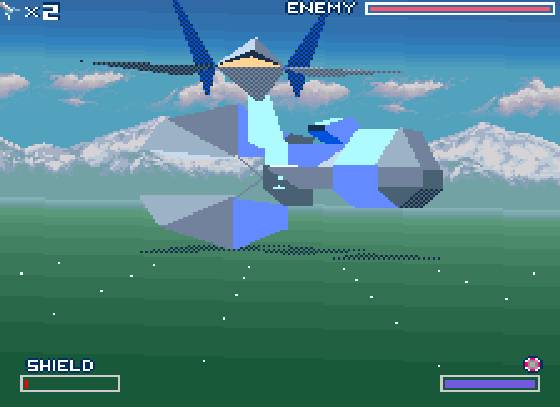
Star Fox suffers from a similar issue. While it was one of the first console games to utilize 3d polygon graphics, that very fact undermines the game in retrospect. The graphics haven’t aged particularly well, and it’s about as basic as you can get for polygonal gaming. The game is also rather short in length, as the SNES had limited space for this type of game, and Star Fox is generally not considered to be as great as its sequel, Star Fox 64.

Having said all that, I actually still had a lot of fun with Star Fox. While the graphics are dated, the art direction is still decent, and it makes enemies and obstacles clear to see and avoid. The gameplay is fast and frantic, and while it is hard, it’s also fair, and gives the player the tools they need to overcome the various challenges the player is presented with.

While the game is rather short, it spices things up with multiple routes. Rather than having a standard difficulty selection, Star Fox instead offers three different paths through the Lylat system, each with their own unique set of challenges and difficulty. This gives the game a fair amount of replayability despite its short length, and helps to make the Lylat system feel like a living breathing world rather than just a shooting gallery.

Another thing that helps is the inclusion of other characters that fight alongside you. Each one is unique and memorable, and it makes the dog fights feel more real and memorable. It gives the game much more personality than other, blander rail shooters.

Star Fox has not aged completely gracefully, and I have a feeling that I will like Star Fox 64 more. But Star Fox genuinely surprised me, and I enjoyed it more than I thought I would. Not perfect, but still pretty fun even all these years later.

How well it holds up       2/4

Personal Enjoyment       4/5

Overall quality                7/10

Recommended

For further information about the game:

https://en.wikipedia.org/wiki/Star_Fox_(video_game)

http://starfox.wikia.com/wiki/Star_Fox_(game)

F-Zero RetroActive Review

F-Zero Picture

F-Zero

Original Release Date: 1990

Racing games are not a genre that I particularly care for. There’s nothing wrong with them, and they can be fun, but it’s not the type of game that I find that engaging or interesting.

But, seeing as I am going through the SNES library, I could hardly overlook F-Zero, as it’s considered one of the pioneers of the genre. While it may have been impressive for its time, how well does it actually hold up?

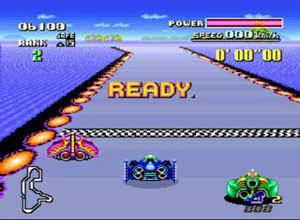
Overall, the game is fine. The tracks are well designed, racing is fun, and it is generally fair with its difficulty. However, it does show its age when it comes to the graphics and the limited content. It may have been impressive for the 90s, but by modern standards it’s nothing special.

But I must admit I don’t have much frame of reference, as I don’t really play that many racing games, and while it is a bit dated, there’s nothing really wrong with F-Zero. As far as racing games go, F-Zero is quite good, and for as old as it is, it holds up decently well. Whether it’s worth checking out depends on whether you like racing games. If you do, then you absolutely should have a look at F-Zero. If you don’t, then you’re probably better off skipping this particular title.

How well it holds up       3/4

Personal Enjoyment       3/5

Overall quality                7/10

For further information about the game:

https://en.wikipedia.org/wiki/F-Zero_(video_game)

http://fzero.wikia.com/wiki/F-Zero

Donkey Kong Country RetroActive Review

Donkey Kong Country picture

Donkey Kong Country

Original Release Date: 1994

While Donkey Kong is a relatively well known icon in gaming, he’s been largely overshadowed by the vastly more successful Mario. However, he did have his time in the spotlight in the 90s with the release of his first standalone title, Donkey Kong Country.

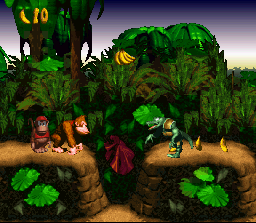
Donkey Kong Country is a 2D side scrolling platformer very similar to Super Mario World in its overall structure and gameplay. There are a number of differences, however. First, the game utilizes pre-rendered computer generated images and models for its graphics, and the effects hold up surprisingly well. It gives the game a unique atmosphere that sets it apart from other SNES platformers, and is right up there with Super Mario World when it comes to having a distinct, creative, and timeless art style.

The controls are very responsive, the difficulty is reasonable, and any and all deaths are entirely on the player. It can be frustrating at times, but it’s always because the player knows they made a mistake, rather than because the game made them fail. The game has a variety of environments and challenges for the player to overcome, and keeps consistent elements in each area while avoiding feeling repetitive.

The only real issue with the game is the same issue I had with Super Mario World, namely the lives system. The lives system is annoying, because all it does is force the player to wade through the same content over and over again if they make too many mistakes. However, the availability of extra lives and the inclusion of mid-level checkpoints and mid-world save points make this a relatively minor annoyance rather than a constant frustration that cripples the entire experience. (Looking at you, Megaman X)

Despite a few minor flaws here and there, Donkey Kong Country is a solid game. It’s creative, memorable, and is right up there with the likes of Super Mario World in terms of overall quality. I didn’t have high expectations going in, but the game genuinely surprised me, and made me glad that I gave it a fair chance.

How well it holds up       4/4

Personal Enjoyment       3/5

Overall quality                9/10

Recommended

For further information about the game:

https://en.wikipedia.org/wiki/Donkey_Kong_Country

http://donkeykong.wikia.com/wiki/Donkey_Kong_Country

Super Castlevania IV

Super Castlevania Picture

Super Castlevania IV

Original Release Date: 1991

While I enjoyed the NES Castlevanias (Not counting Simon’s Quest), they were held back by the limits of the time. Castlevania’s difficulty tended to stem from archaic design choices, and the high level of frustration could often compromise or overrule any enjoyment of the game. As a result, while I like the original and Dracula’s Curse, neither are what I would consider to be great games.

Super Castlevania IV, on the other hand, is a title that I would consider to be a great game. It had everything that was good about the NES titles while updating or removing most of the elements that were frustrating.

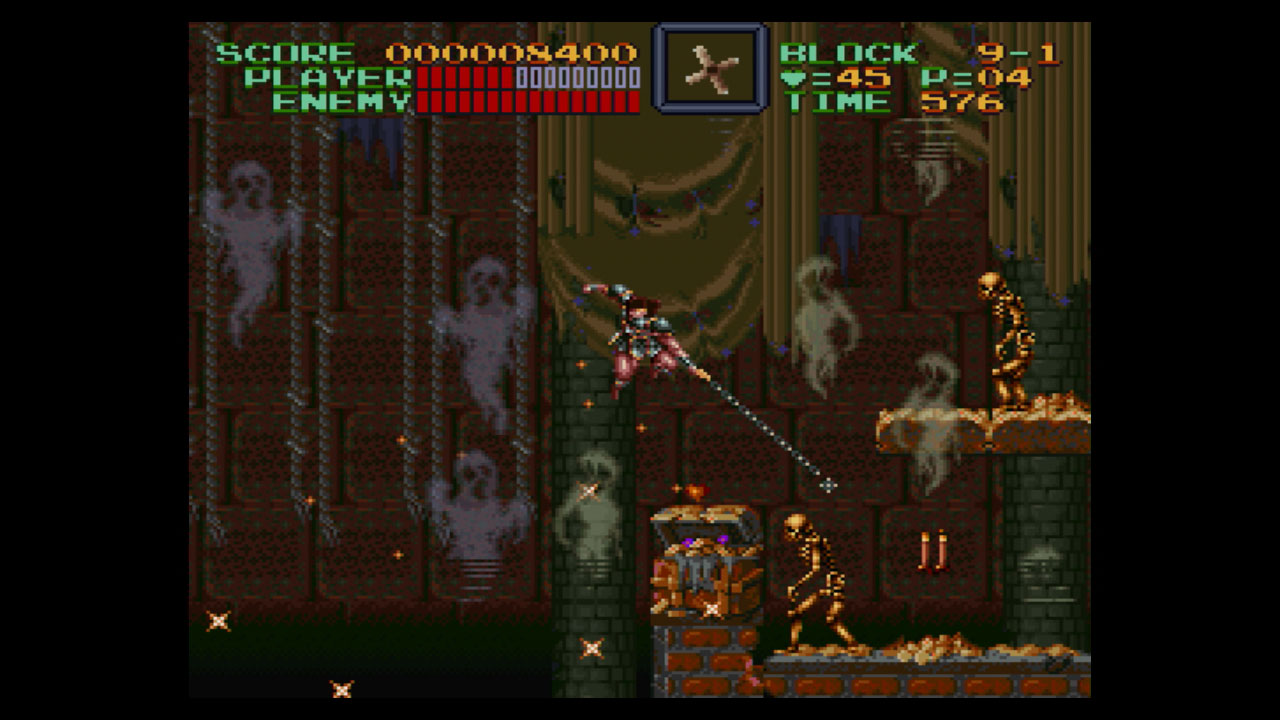
The first significant improvement is the controls. While they’re still a little stiff, they’re much more responsive than the NES controls. The player has much more freedom when it comes to movement, and this is epitomized in the whip controls. Unlike in the first three games, Simon can now whip in all 8 directions, which makes it easier to deal with the various threats the game throws at you. The game still keeps you on your toes, however, and while it’s not as hard as the older games, it still provides a good challenge.

The art direction is very good, and easily blows the NES games out of the water when it comes to the visuals. There are more details, more variety, and while the graphics do show their age a bit, they hold up much better than the NES games. The soundtrack is also very good, suiting the atmosphere of the game perfectly, and the nods to the older games are clever, but not overbearing.

In many respects, Super Castlevania is the culmination of the old school Castlevanias. Unfortunately, it has the same problem as Megaman X, in that it was bold enough to update and change some things, but didn’t go all the way with it. The result is a game that is mostly great, but is sadly shackled to archaic traditions of its predecessors.

The first major problem is the lives system. The lives system, in the end, has always been about making a game longer rather than better. It was tolerable in the NES era because the space on the cartridge was limited, and so it was an easy way of making a game last longer when it really didn’t have that much content. But maintaining the lives system into the 16 bit era was a mistake, particularly for games that didn’t need it. Super Castlevania has many more levels than the original, and the levels are much longer than they were in the original. It was already a good length, so it didn’t need to resort to the lives system to pad it out.

The iteration times can also be rather ridiculous. There were several times in the game where I could get through most of a section just fine, but there’d be an obstacle at the very end of the section that gave me trouble. Now, you’d think the game would start me relatively close to the area that’s giving me trouble, right? But no, instead the game will send you back a ridiculous amount when you die, and will force you to continuously wade through challenges you’ve already mastered multiple times just to have another go at the trouble spot.

In particular, there were some boss fights that are rather tricky. But instead of just starting you right before the boss room when you die, the game will force you to redo one or more previous rooms that you already overcame. It’s a cheap and annoying tactic to pad the game out, and coupled with the lives system, there are times where Super Castlevania feels reminiscent of its predecessors in a bad way.

Another issue is the inclusion of the items. In the original game, for better or worse, the items were important, as the whip by itself was not that powerful. But with the ability to whip in 8 directions, the whip will suffice for most of the obstacles that you face throughout the game, rendering the items mostly redundant. There are a few sections where having a projectile is handy, and is more useful than the whip alone, but for most of the game, the whip is all you need. It probably would have benefitted the game if they either eliminated all of the items, or just provided one projectile weapon as an alternative attack. That way, more focus could be placed on the whip, and there could have been more things such as the swinging hooks to provide new ways of overcoming obstacles.

The issue with the items rolls into other areas, as the game will encourage you to hit the many candles you find throughout the journey. In the original game, this made sense, as the rewards you got from the candles were important. But in Super Castlevania, the candles are rather redundant. The rewards the candles can give are either an item (which, for the most part, you won’t need), a heart (which you won’t need, since you don’t really need the items), or a treasure bag. (Which only helps you if you care at all about getting a high score, which most rational people shouldn’t care about) As the rewards from the candles aren’t important, they just make the game feel rather cluttered, and it would have been better to either significantly reduce the number of candles, or eliminate them completely.

Finally, Super Castlevania retains some design choices that didn’t even make sense in the original game. There’s a time limit for each level which was completely pointless, as I never came close to running out of time in any of the games. There’s also the fact that when you die, your whip gets downgraded, but you can get it back to full power almost immediately, so downgrading the whip doesn’t really have a point except to serve as a very mild annoyance.

Overall, Super Castlevania has some troubled elements. It maintained many traditions of the older games without stopping to think whether these traditions made sense or if changing them would benefit the game, and as a result the game feels a little sloppy in its design. It’s good, but it could have been more.

In the end, however, I enjoyed Super Castlevania a lot. While it makes some mistakes, it does many things incredibly well. It surpasses the NES games in terms of overall quality and entertainment value, and it’s a pretty great title for the SNES.

How well it holds up       3/4

Personal Enjoyment       4/5

Overall quality                 8/10

Recommended

For further information about the game:

https://en.wikipedia.org/wiki/Super_Castlevania_IV

http://castlevania.wikia.com/wiki/Super_Castlevania_IV

Super Metroid RetroActive Review

Super Metroid picture

Super Metroid

Original Release Date: 1994

While the original Metroid is generally regarded as a classic, it’s more for its innovative ideas than how good it is as an actual game. It had great ideas, but an absolutely horrible execution of those ideas, held back as it was by the limitations of its time.

Super Metroid, on the other hand, was able to do what the original was not, and fully fleshed out the ideas of exploration and nonlinear gameplay, and took it to the next level.

Super Metroid is a fantastic game, with great controls, solid art direction, excellent pacing, wonderful atmosphere, blah blah blah. You’ve all heard this before, so instead of just saying what everyone else has already said, I’m going to play devil’s advocate and focus on what I didn’t like about Super Metroid.

The biggest flaw with Super Metroid is that it doesn’t give the player any sort of direction whatsoever. Now, this mostly works in the game’s favor, as it gives players a great deal of freedom, and usually gives them the tools they need to figure out what they need to do. But there are times where the lack of feedback can be detrimental to the experience. Sometimes the way forward can be a bit obscure, and if you happen to miss one tiny detail in the environment, you’ll wind up running in circles for hours, wondering how to advance further in the game. It’s light years better than the original Metroid in this regard, but it’s still a problem. It’s an issue that’s exacerbated by the inclusion of several areas that are literally dead ends. Now, most sections of the game provide some sort of reward for the player for getting through them, but there are a handful that provide literally no reward at all, and seem to just be there to waste the players time as they’re trying to figure out where they need to go.

Another thing that doesn’t help is that the game doesn’t always explain how its mechanics work. Now, most of the mechanics are intuitive, but for the handful that aren’t, it can be difficult if not possible to figure out how to use them. For example, I got through most of the game without ever needing to wall jump. Then, I suddenly hit a section where the wall jump was required, and I was stuck. The controls for how to wall jump are completely counterintuitive, and there isn’t any sort of tutorial to make up for it.

I’m not saying that the game should have held the players hand, or that it should have blatantly told the player what they needed to do next. I’m just saying that providing a little hint or tip for players who get stuck would have been nice. You can make a game deep and challenging while still making it accessible.

Another problem with the game isn’t really with the game itself, but rather with the hype around it. Everyone says that it’s a great game. And, yeah, it is, but people usually go beyond that, and act as though it’s God descended from heaven in the form of a video game. And while I liked it, I never got that sort of feeling from it. I wouldn’t put it on my top 10 favorite games of all-time list, for example. I liked it, but the overhyping didn’t help, and may leave some people feeling a little disappointed.

All cynicism aside, Super Metroid is an incredibly well-crafted game. Its flaws are easily outweighed by the things it does right, and it’s still perfectly playable even today. I personally didn’t like it as much as a lot of people did, but I did enjoy it, and if you call yourself a gamer, you need to play Super Metroid at least once.

How well it holds up       4/4

Personal Enjoyment       4/5

Overall quality                 9/10

Recommended

For further information about the game:

https://en.wikipedia.org/wiki/Super_Metroid

http://metroid.wikia.com/wiki/Super_Metroid

Megaman X RetroActive Review

Megaman X picture

Megaman X

Original Release Date: 1993

Megaman 2 was my favorite game for the NES. However, by Megaman 3 the formula was starting to get a little stale, and by the time Megaman 6 came around, the series had vastly over stayed its welcome. With the franchise dwindling in quality and popularity, something needed to be done to revitalize the series. The answer came in the form of Megaman X, the first game released for the SNES, and one that managed to retain the familiar elements of the NES games while adding its own flavor to the mix.

The first thing to note about Megaman X is how expansive it is compared to classic Megaman. While the levels in Megaman were good, they were always constrained by the limitations of the NES. The levels in Megaman X, on the other hand, are much broader in scope, and allow for new challenges and new ways of overcoming obstacles.

In Megaman X, the player retains the same basic abilities of classic Megaman, but with a few new twists. First of all, the charged shot introduced in Megaman 4 returns, but is even more useful and fun to use than in Megaman 4. However, the game avoids making it feel overpowered, which was one issue with Megaman 4. Another new ability is the ability to wall jump. This ability gives the player much more mobility, and allows the player to evade deaths that would have been unavoidable in the classic Megaman games. Finally, there’s the dashing ability. This is really just a variation of the slide ability introduced in Megaman 3, but it’s a useful and fun move.

The game continues the tradition of having great art direction and great music, but with the enhanced capabilities of the SNES fueling it. As a result, playing through the game is a visual and auditory delight.

In many respects, Megaman X surpasses its 8-bit predecessors. Unfortunately, it shares some similarities with Megaman 4, in that the design is rather unbalanced in certain aspects. I’ve heard the complaint that this game is too easy, an accusation that I find, quite frankly, baffling. While it does have a different feel from the classic games, I felt that the overall difficulty was about the same as the classic games. A good amount of the difficulty comes from legitimate challenges, but unhappily there are some flawed design choices.

First of all, the game starts you off with significantly less health than in the classic games. This makes the game feel rather punishing at times, as you can’t afford to make too many mistakes before dying. The only way to increase your health is to find hidden item packs in the levels, many of which are difficult to get, and some of which you won’t even realize are there.

The bigger issue with the difficulty, however, is the lives system and the iteration times. An archaic trend of the NES era, the lives system was only tolerable because it was a cheap way to make a game last longer. For the SNES era, however, when games could be much bigger and longer, and were overall better designed, the inclusion of the lives system is just infuriating.

The game is very stingy with checkpoints, so if you die, the game will send you back a ridiculous amount. And if you run out of lives, you have to do the entire level all over again. I’ve said it before and I’ll say it again: You should NEVER have to wade through minutes of content you’ve already mastered just to get another shot at the spot that was giving you trouble.

Another major problem is the inclusion of robot master weapons. Like in Megaman 4, the charged shot renders the other weapons mostly redundant. Here, however, it’s even more apparent that the other weapons were only included out of some misguided sense of tradition, and are only useful under very specific circumstances. Most of the game is built around using the charged shot, so it would have benefited the game to just eliminate the extra weapons and keep the overall design more simple and straightforward.

Finally, the game is rather short. Megaman 4 managed to figure out a way to make the experience a good length without padding it out, so it’s rather puzzling that Megaman X went back to the shorter structure of the first two games.

Megaman X was brave enough to redesign and change some things about the Megaman franchise, but seemed shackled to other things out of some misguided need for consistency, and the end result is a game that is rather sloppy in its design. If it had gone all the way, if it hadn’t been afraid to truly reinvent the series, it could have easily been better than any of the classic games, even 2.

Despite its shortcomings, though, Megaman X is a fun game. It’s a fresh take on the Megaman formula, and while it has its flaws, it’s also very unique. I can see why this game isn’t talked about as much as the classic Megaman games, but it’s a worthy spinoff, and a pretty good game in its own right.

How well it holds up       3/4

Personal Enjoyment       4/5

Overall quality                 7/10

For further information about the game:

https://en.wikipedia.org/wiki/Mega_Man_X_(video_game)

http://megaman.wikia.com/wiki/Mega_Man_X_(video_game)

The Legend of Zelda: A Link to the Past RetroActive Review

A Link to the Past Picture

The Legend of Zelda: A Link to the Past

Original Release Date: 1991

While the NES Zelda titles are widely regarded as classics, neither one are really that outstanding by modern standards. While pioneers of the genre, they were held back by the limitations of the time, and weren’t able to make the most of their innovative ideas.

A Link to the Past, on the other hand, was able to take what the first two games did well, and take it to the next level. It went back to the basic formula of the first game, included elements from the second game, and added a ton of new features and innovations of its own. The end result is a masterpiece that has weathered the passage of time far better than its predecessors.

A Link to the Past has excellent combat, a vast overworld, iconic music, fun items, engaging challenges, colorful NPC’s, and a simple but memorable storyline.

One thing that A Link to the Past does especially well that the original Zelda didn’t is the pacing. A Link to the Past is more linear, with the dungeons having to be beaten in a specific order to obtain new items to unlock new areas. While many who prize the unbridled “freedom” of the original may see this as a change for the worse, I think it’s a change for the better. The advantage of linear gameplay is that the developers can plan around a set path, and give the player a properly paced narrative and a gradually rising difficulty curve. It allows for a balanced and cohesive experience that is impossible if the player is allowed to explore everything from the start.

But they didn’t abandon the exploration of the first game by any means. There is still plenty of exploring to do, plenty of secrets to find, and it’s very engaging and rewarding to trail off the beaten path and attempt to find all of the game’s secrets. The dual world mechanic allows for new methods of reaching new areas, and makes the world feel dynamic and alive.

Speaking of dynamic and alive, the NPCs this time around are significantly more memorable than the ones in the first two games. They actually come across as real, living people, rather than crappy pixelated pictures trying to masquerade as real people. This, combined with the expansive and well put together overworld makes it feel like you’re going on an epic adventure across a vast landscape, something that neither of the NES Zeldas was really able to do.

Honestly, A Link to the Past is an excellent game, and there’s not much wrong with it. But it does have a few flaws. The graphics look a bit dated, and the gameplay isn’t quite as smooth as in later Zelda titles. The dungeons in the dark world, while really good, don’t have a lot of variety in terms of aesthetic. There are some exceptions such as the Swamp Palace and Ice Palace, but a lot of the other dungeons tend to blend together, and don’t stand out individually. This isn’t helped by the fact that all of the dark world dungeons have the exact same soundtrack. It’s an okay theme, but by the time you get to Ganon’s Tower, you’re going to be sick to death of that particular piece of music. And finally, the game does occasionally engage in the archaic bullshit that made the first game such a chore, with the way forward being needlessly cryptic.

On the whole, though, A Link to the Past is a well-crafted and well put together game. It was the first truly great Zelda game, and is still very much worth playing even today.

How well it holds up       3/4

Personal Enjoyment       5/5

Overall quality                9/10

Recommended

For further information about the game:

https://en.wikipedia.org/wiki/The_Legend_of_Zelda:_A_Link_to_the_Past

http://zeldawiki.org/The_Legend_of_Zelda:_A_Link_to_the_Past

Super Mario World RetroActive Review

Super Mario World picture

Super Mario World

Original Release Date: 1990

There’s quite a lot of debate about whether Super Mario Bros 3 or Super Mario World is the better game. Speaking as someone who only recently played both, and has no nostalgic attachment to either title, I have to say that Super Mario World is hands down the more solid game, and easily blows all of the NES Mario games out of the water, even 3.

Super Mario World managed to incorporate the more advanced features of SMB3 while recapturing the elegant simplicity of the original SMB. The end result is the best of both worlds, a game that has depth and yet is incredibly straightforward and approachable.

The challenge is just right, with a gradually rising difficulty curve and obstacles that are tough but fair. While it retains the rather archaic lives system of the NES era, it compensates for it by including mid-level and mid-world checkpoints. This gives the player more breathing room, and avoids excessively punishing them for mistakes.

Each world has the same basic elements while adding new ones and changing the environments a little each time. This gives the game a constant feeling of familiarity without becoming repetitive, as tended to happen with the original game.

Finally, the audio and visuals of the game are incredibly charming, and hold up much better than those of its 8 bit predecessors.

Honestly, there’s not much else to say about Super Mario World. Everyone says it’s a great game, and, yeah, it is. If you don’t like Mario games, then you probably won’t like this game, but otherwise, it’s a title that definitely should be checked out.

How well it holds up       4/4

Personal Enjoyment       3/5

Overall quality                 9/10

Recommended

For further information about the game:

https://en.wikipedia.org/wiki/Super_Mario_World

http://www.mariowiki.com/Super_Mario_World

Top 10 NES Games

Top 10 NES Games

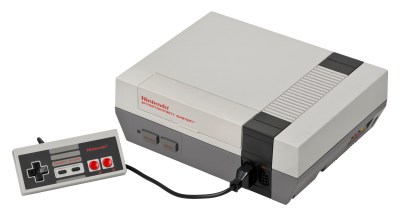
NES-Console-Set

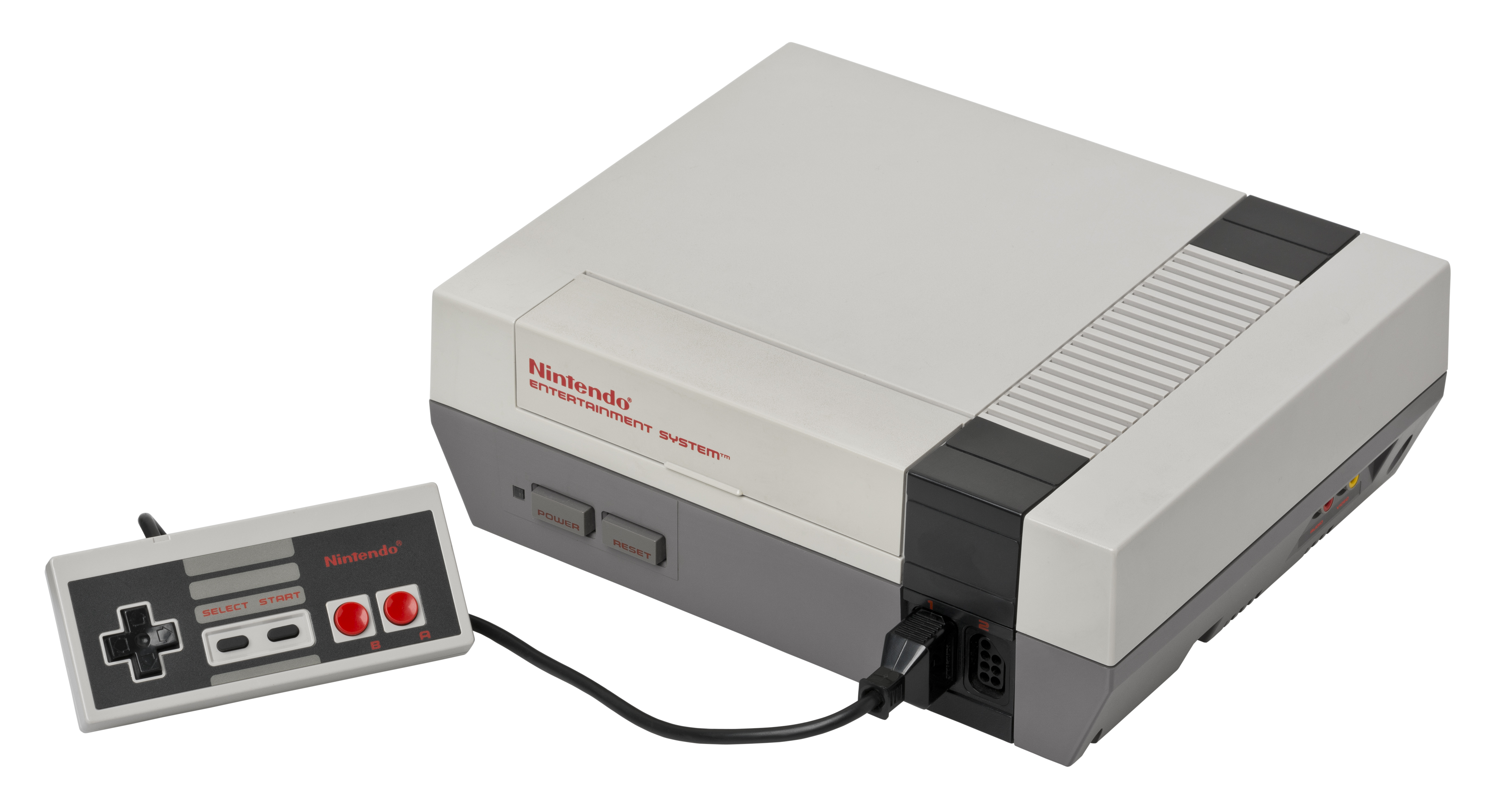
The NES era is probably the most overrated era in all of video game history. While an undeniably important and influential period in the medium, it has been overly romanticized by older gamers and given a disproportionate level of praise. Many of the games for the NES haven’t aged that well at all, and almost all of them suffer from some archaic quirks.

By comparison, most of the classics from the fourth and sixth generation of gaming have aged like a fine wine. And while many of the classics from the fifth generation have suffered from the awkward transitional period to the third dimension, most of them are still perfectly playable and fun even to this day. When we turn to the third generation and the NES, however, there is a massive drop in quality and scope. Many games that were mind blowing at the time seem rather quaint now, and most don’t hold a candle to their 16 bit counterparts.

Having said all that, there are still plenty of good games for the NES, and there are many that I’ve enjoyed a great deal. I just felt like playing devil’s advocate for a bit, because whenever people make this kind of list they tend to have nothing but gushing praise for the NES era rather than a more honest and balanced appraisal.

There are a few stipulations for the games on this list. Firstly, only games that I reviewed are eligible. If I didn’t review a game, it’s either because I didn’t play it, or I did, but couldn’t bring myself to play it long enough to give a full opinion on it. There were a number of games for the NES that are regarded as classics that I did actually try, but found I couldn’t stomach playing for very long.

Secondly, the games on this list were chosen not based on what was the most popular or influential, but simply on which games for the NES I personally enjoyed the most. As a result, if there are any games that aren’t on this list, it’s most likely because I didn’t happen to enjoy them as much as I was apparently supposed to.

And finally, only one slot per franchise.

Duck Tales picture2

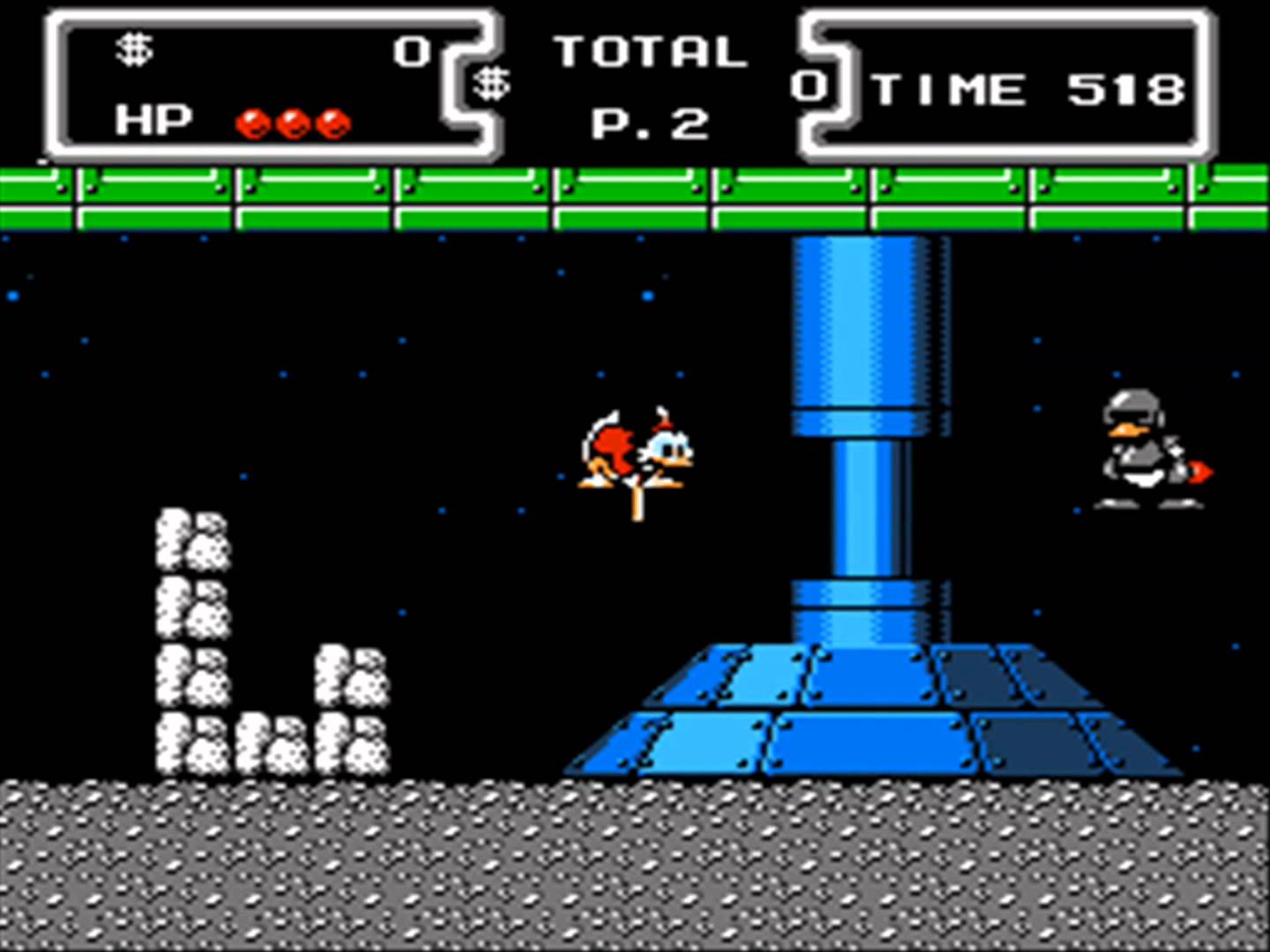
10: Ducktales

Starting off the list is a lesser known game for the system, and one not often included in these sorts of lists. While bearing many similarities to other 8 bit platformers, it has some unique ideas that make it stand out from the crowd. It’s a bit short and nothing that special by modern standards, but it’s a fine little gem.

That moon theme is also pretty damn catchy.
Contra picture2

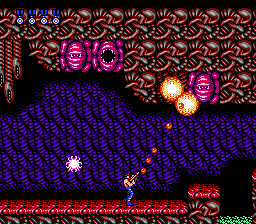
9: Contra

Fighting off an alien invasion may not be an original idea for a story, but it can make for a pretty invigorating game. Tight controls, great music, simple but appealing visuals, Contra is an action packed shooter that is constantly engaging. The lives system is kind of bullshit, but the Konami code mitigates the issue for the most part.
Castlevania 3 picture2

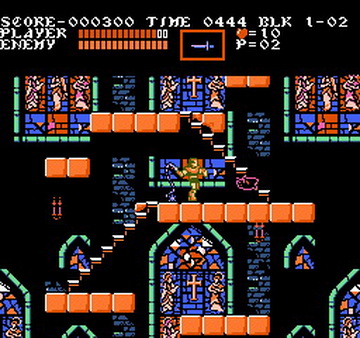
8: Castlevania 3: Dracula’s Curse

It’s brutal. It’s relentless. It’s unfair. And yet there’s something about it that kept me coming back. While the old school Castlevania games suffer from a lot of archaic design choices, they have a unique charm to them that you can’t get anywhere else. The original is overall the better designed and more balanced game, but I still liked the third game more. It was an ambitious game for the NES, and one can’t help but respect it, even if all of its innovations didn’t quite work out. Still, this is one game I have to use save states for to preserve my sanity.
Ninja Gaiden picture2

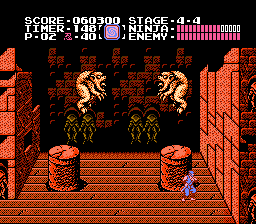
7: Ninja Gaiden

Many games from the NES era were difficult less because of legitimate challenges, and more from flaws in the games design, whether intentional or unintentional. While Ninja Gaiden suffers as a result, what saves it is the precise controls and the swift and satisfying gameplay. Its story elements don’t hold up that well, but each level is full of memorable challenges, and the game does an excellent job of making you feel like a ninja.
Punch Out picture

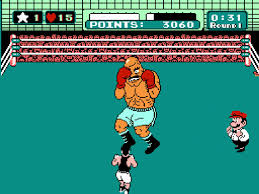
6: Punch-Out

In an era that was flooded with platformers, it’s nice to find a game that’s unique, and you can’t get much more unique than Punch-Out. In the same way that Ninja Gaiden made you feel like a ninja, Punch-Out does a good job of making you feel like you’re actually in the boxing ring. Smooth controls, memorable fights, and a steady difficulty curve keep the experience constantly engaging. I’m normally not into sports games, but Punch-Out has made me more open to the genre.
Super Mario Bros picture2

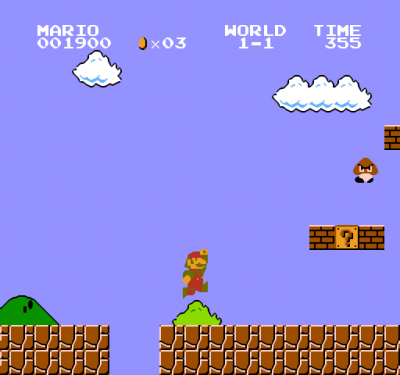
5: Super Mario Bros

You knew a Mario game had to show up at some point on this list. While I greatly enjoyed Super Mario Bros 2 and respect Super Mario Bros 3, the original is the obvious pick for me. It had an elegant and straightforward simplicity to it that the other games (particularly 3) didn’t quite replicate. Still quite a fun game after all these years, but there are four NES games I like more.

Metal Storm picture2

4: Metal Storm

For a game that I’d never heard of before I decided to pick up and play it, it certainly surprised me. A later entry for the NES, it was able to take greater advantage of the NES’s capabilities, and as a result looks and sounds a lot better than many of its earlier brethren. What really sets it apart, though, is the unique ability to switch gravity at will, an ability the game uses to excellent effect. If there was ever an underrated NES game, it was this one.
Zelda 2 picture2

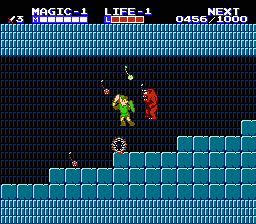
3: Zelda II: The Adventure of Link

While I never cared for the original Zelda, Zelda II is a game I’ve enjoyed a great deal. It had the same basic formula established by the first game while taking it in a new and different direction. It’s not as good as, say, A Link to the Past, Ocarina of Time, or Wind Waker, but I think it still holds its own due to its unique features. The RPG elements are implemented well, the combat is satisfying, and while it does have its flaws, I think it has aged much better than the original.

Kirby's Adventure picture2

2: Kirby’s Adventure

Almost all of the NES games I’ve played, even the one at number 1, have some archaic design choices that drag the experience down at least a little bit, in some cases being a deal breaker. Kirby’s Adventure is not one of those games. It didn’t concern itself with wasting the player’s time in order to make the experience last as long as possible, and instead simply focused on being fun. And it did that quite effectively, with colorful visuals, catchy music, and simple but charming gameplay. It’s a game that’s worth checking out even if you normally can’t stand NES games.
Megaman 2 picture2

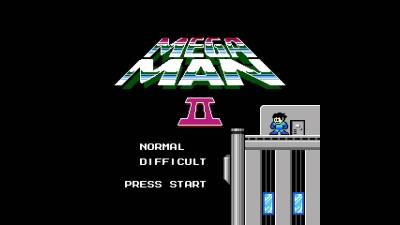
1: Megaman 2

While I like all of the games on this list, this is the only one that managed to become one of my favorite games of all time. Some bullshit design decisions in the Wily stages notwithstanding, this game is pure fun start to finish. Like Super Mario Bros, it has an elegant simplicity to it, as well as a high amount of replay value. It’s a fantastic experience unlike anything else I’ve played, and one that, as far as I’m concerned, wasn’t surpassed or even matched by the following Megaman games. While I’ll never quite understand why some people hold the NES era in such high reverence, Megaman 2 gives me a glimpse of where they’re coming from.

So, those were my favorite NES games. What are your favorites? Do you greatly enjoy the NES era, or are you like me and think it’s a bit overrated? Let me know in the comments. Thank you for reading, and feel free to stick with me as I move onto the SNES era.
Megaman 4 RetroActive Review

Mega_Man_4 picture

Megaman 4

Original Release Date: 1991

While Megaman 2 and 3 are generally regarded as the best games in the series, the following games are less well known, and typically are only talked about by diehard Megaman fans. Is this because they weren’t as good, or simply because they weren’t as successful as their predecessors?

Megaman 3 had a rather troubled development period, with the developers claiming that the game was rushed out the door before they could quite polish it up. And honestly, having played Megaman 3, it does feel like a game that wasn’t quite finished, particularly when compared with Megaman 2.

This is thankfully not the case with Megaman 4, which not only feels like a more complete experience, but really steps up the production values, at least for NES standards. The game looks more appealing and detailed than any of the previous games, and continues the tradition of giving each level a distinct and unique aesthetic.

It includes all of the new additions from Megaman 3, while also making additions of its own. In particular, Megaman now has a charged shot, which gives him more breathing room while dealing with enemies. Megaman can also obtain some new items that give him increased mobility. And the new addition of an extra antagonist, Dr. Cossack, allows for the game to be longer without resorting to the more manipulative and tedious method of the doc robot stages from Megaman 3.

In many respects, Megaman 4 surpasses the previous games, and is more fun to play than Megaman 3. But like Megaman 3, it also has a fair number of shortcomings. Most of these flaws come down to the fact that the overall design and difficulty of the game is unbalanced, being too easy in some respects and too hard in others.

It’s too easy when it comes to the weapons Megaman has available to him. While the items are much more useful and fun to use than in Megaman 3, the charged shot renders many of them rather redundant. Because the default blaster in Megaman 2 and 3 was relatively weak, it incentivized the player to get good with the weapons, and Megaman 2 in particular was good at providing plenty of situations where Megaman’s arsenal was actively useful. This is not the case with Megaman 4, as the charged shot means the player doesn’t really need to use the weapons except in very specific situations. The game should have either balanced things out so that both the charged shot and weapons were actively and equally useful, or it should have eliminated one and concentrated on the other.

In addition, Megaman can also obtain extra items besides the Rush items to reach new areas, but they’re rather redundant, and don’t serve much purpose aside from cluttering up the gameplay.

Now, the game is too difficult when it comes to many of the obstacles the player has to deal with. Megaman 3 focused less on straightforward and fair challenges and more on trial and error gameplay, and Megaman 4 unfortunately continues this tradition. This time around, however, the level design is a bit more obnoxious, as there is a much greater abundance of obstacles that are one hit kills, namely spikes and bottomless pits. As a consequence, the game is a bit of a chore the first time around, and like Megaman 3 is only really fun once the player knows what to expect.

Megaman 2 had an elegant simplicity to it, and managed to capture a constant and endearing element of fun to its gameplay that both Megaman 3 and 4 didn’t quite manage to replicate. I did have fun with Megaman 4, and I actually enjoyed it more than Megaman 3, but not as much as Megaman 2. In the end, if you enjoyed the first 3 Megaman games, you’ll probably like Megaman 4. But if Megaman 2 and 3 didn’t win you over, Megaman 4 won’t win you back.

How well it holds up       3/4

Overall quality                 7/10

For further information about the game:

https://en.wikipedia.org/wiki/Mega_Man_4

http://megaman.wikia.com/wiki/Mega_Man_4